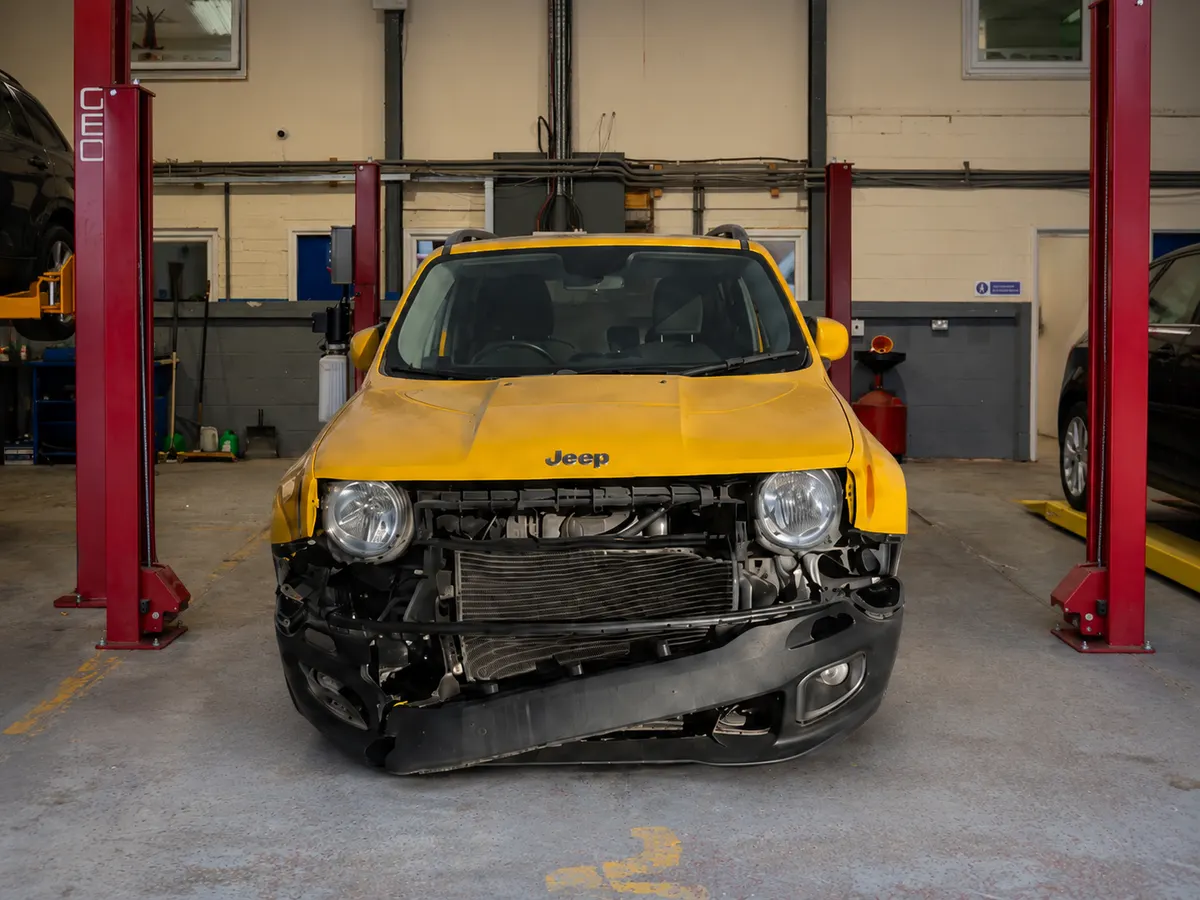

What “Cat A” actually means
Cat A stands for Category A. The A is the most severe of the four current UK write-off categories. A Cat A vehicle has sustained damage so severe that the whole vehicle, including every part and component, must be crushed and destroyed. Nothing on a Cat A car can be reused, resold, or recycled into another vehicle.
Cat A is one of two “non-repairable” categories under the ABI Code of Practice V12, published 28 May 2025. The other is Cat B, which also cannot return to the road as a whole vehicle but does allow parts to be salvaged. Cat A is the only category where the parts themselves are condemned.
The Cat A marker is permanent. The vehicle’s record on the Vehicle Salvage & Theft Data register (VS&TD, formerly MIAFTR) shows Cat A status forever, although in practice the vehicle no longer exists once the categorisation is enforced.
The official Cat A definition (ABI Code V12)
The ABI Code V12 defines Cat A as:
A vehicle that must be crushed and not broken for parts. The vehicle has sustained damage that renders the entire vehicle, including all components and systems, unsuitable for re-entry into the parts supply chain.
Three things follow from that definition:
- The whole vehicle is condemned. Unlike Cat B (where the body shell is destroyed but parts can be removed and reused), Cat A condemns everything. No engine, no gearbox, no wheels, no electronics.
- Crushing is required. The vehicle is sent to an Authorised Treatment Facility (ATF) for destruction. A Certificate of Destruction is issued.
- No legal pathway back. The car cannot be repaired, sold privately, broken for parts, or driven on UK roads ever again.
Common Cat A causes
A car typically ends up Cat A through one of a handful of scenarios:
- Severe fire damage. A vehicle that has burned out completely, with damage to structural and electronic components throughout, is the most common Cat A scenario. Heat damage compromises wiring, safety systems, and the structural integrity of every nearby component.
- Complete submersion or severe flood damage. A car submerged in water (particularly salt water) for any length of time has electronics, safety systems, and corrosion damage that makes salvage unsafe.
- Catastrophic structural destruction. Damage so extensive that the structural framework is unrepairable AND parts integrity cannot be verified. The dividing line between Cat A and Cat B is whether the parts themselves can be safely reused.
- Severe EV high-voltage battery damage with fire risk. Where an EV’s HV battery has been compromised by fire or impact in a way that makes the whole vehicle unsafe to handle for parts recovery, the vehicle is Cat A. V12 introduced specific safety-handling rules for HV-damaged EVs.
The dividing line between Cat A and Cat B is set by the Appropriately Qualified Person (AQP) assessing the vehicle, working to the rules in the ABI Code V12.
Cat A vs Cat B vs Cat S vs Cat N
| Category | Damage | Back on the road? | Parts salvageable? | V5C re-issued | Buy-back? |
|---|---|---|---|---|---|
| Cat A | Scrap, total destruction | No | No | No (destroyed) | No |
| Cat B | Shell unrepairable | No (whole vehicle) | Yes | No (destroyed) | No |
| Cat S | Repairable structural | Yes, after repair | n/a | Yes, with literal comment | Yes |
| Cat N | Repairable non-structural | Yes, after repair | n/a | Yes, no comment | Yes |
Source: ABI Code of Practice V12, May 2025; GOV.UK insurance write-offs guidance.
For the full pillar overview, see What is a car insurance write-off?.
What happens to a Cat A car
Once an AQP categorises a vehicle as Cat A, the process is fixed:
The insurer takes possession of the vehicle as part of the settlement. The vehicle is transferred to an Authorised Treatment Facility (ATF). The ATF physically destroys the entire vehicle (crushing is the standard method) and issues a Certificate of Destruction. DVLA is notified that the vehicle has been destroyed and the record is updated; the vehicle is deregistered.
You can’t keep a Cat A car, buy it back, or arrange for it to be broken for parts privately. Buy-back is permitted only on Cat S and Cat N. Cat A and Cat B both prohibit it.
You also can’t sell a Cat A car. Even at the salvage stage, the car is the insurer’s property after settlement, and the legal destination is the ATF. Any private sale of a Cat A vehicle (or its parts) is a misrepresentation offence and, in practice, fraud against any subsequent purchaser.
It’s a common misunderstanding among recently-settled owners. The vehicle felt like personal property up until the moment of payout. From the point the settlement is paid, ownership transfers to the insurer, and the only legal destination is destruction at the ATF.
What to do if your car is declared Cat A
The administrative process from the owner’s side is short.
Step 1: Accept or contest the settlement. The insurer offers you the pre-accident market value of the vehicle minus your excess and any outstanding finance. If you believe the offer is too low, you can challenge it with evidence (recent service records, comparable market listings, condition documentation). Settlement disputes are resolved before the vehicle moves to destruction.
Step 2: Hand over the V5C. The original V5C (log book) is surrendered to the insurer. The vehicle leaves your possession permanently at this point.
Step 3: Notify DVLA. You notify DVLA that your vehicle has been written off via gov.uk/written-off-vehicle. Failing to notify carries a £1,000 fine. The insurer’s notification to VS&TD does not replace your obligation to notify DVLA.
Step 4: Receive the settlement. The insurer pays the agreed amount. You do not receive any additional scrap or salvage value; the salvage value is built into the settlement calculation.
There is no further action. The insurer arranges destruction at the ATF and DVLA closes the vehicle’s record.
FAQ
What does Cat A mean?
Cat A stands for Category A. It is the most severe of the four current UK insurance write-off categories. A Cat A vehicle must be crushed and destroyed in its entirety; no parts can be salvaged and the car cannot legally return to the road.
Can a Cat A car be driven?
No. A Cat A car cannot legally return to UK roads under any circumstances. Once a vehicle is categorised Cat A, it is required to be destroyed at an Authorised Treatment Facility.
Can a Cat A car be repaired?
No. Cat A is one of two non-repairable categories (the other is Cat B). Repair is not a legal option regardless of how much you might be willing to spend.
Can I sell a Cat A car privately?
No. After settlement, the vehicle is the insurer's property and the legal destination is the ATF for destruction. A private sale of a Cat A vehicle would be a misrepresentation offence and a fraud against any buyer.
Can parts be salvaged from a Cat A car?
No. Cat A specifically prohibits parts salvage. This is the key difference between Cat A and Cat B; under Cat B the body shell is destroyed but undamaged parts can be removed and reused, whereas Cat A condemns the whole vehicle.
Can I buy back my Cat A car from the insurer?
No. Buy-back is permitted only on Cat S and Cat N. Cat A and Cat B both go to destruction and cannot be bought back by the owner.
Why is Cat A more severe than Cat B?
Cat A means the whole vehicle (including parts) is condemned. Cat B means the body shell is destroyed but parts can be salvaged. Both result in the vehicle not returning to the road as a whole, but Cat A is the only category that also removes parts from the supply chain.
What kinds of damage cause Cat A?
Severe fire damage (most common), complete submersion or salt-water flooding, catastrophic structural destruction where parts integrity cannot be verified, and severe EV high-voltage battery damage with fire risk.
Do I have to notify DVLA of a Cat A write-off?
Yes. You notify DVLA via gov.uk/written-off-vehicle. Failing to notify carries a £1,000 fine. The insurer's separate notification to VS&TD does not discharge your obligation.
Will I get scrap value for a Cat A car?
No, not separately. The salvage value is built into the settlement offer the insurer makes. You receive the pre-accident market value of the vehicle minus your excess and any outstanding finance; you don't receive an additional scrap-value payment on top.
How long does the Cat A process take?
Typically two to four weeks from claim to settlement, similar to other write-off categories. The destruction itself is arranged by the insurer after settlement.
Is the ABI Salvage Code law?
No. It is a voluntary industry code maintained by the Association of British Insurers. Around 97% of UK motor insurers (every ABI member) adhere to it. The government confirmed in February 2026 it has no plans to give the Code statutory footing.