

What “Cat S” actually means
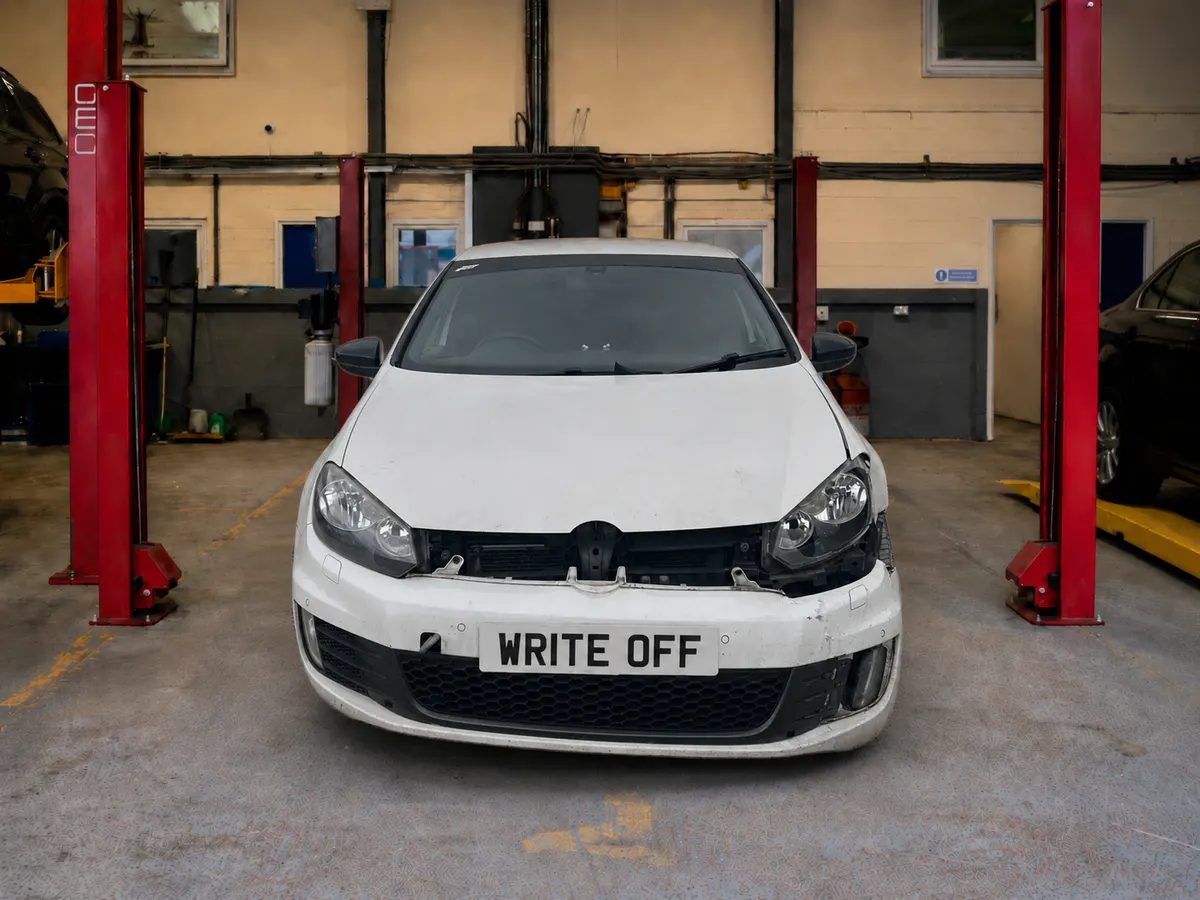
Cat S stands for Category S. The S is for “structural.” A Cat S car is one your insurer has written off after damage to the structural frame or chassis. That’s the part of the car which determines its crash protection, its airbag deployment logic, and the geometry of its safety systems. The damage is repairable, but it’s a bigger job than Cat N. Repair has to follow manufacturer-approved or Thatcham-recognised methods. A new MOT is typically required before the car returns to the road.
Cat S is one of the four current UK write-off categories. The others are Cat A and Cat B (which cannot legally return to the road) and Cat N (which covers non-structural damage only). For a wider overview, see our pillar guide to insurance write-offs.
The defining feature is structural damage by design. The crash structure of the car (chassis legs, B-post reinforcements, inner sills, firewall, or on newer EVs the mega-casting components) needed to be repaired, realigned, or replaced. That isn’t a cosmetic issue. It affects how the car performs in a future accident, which makes repair quality safety-critical rather than discretionary.
Cat S was introduced on 1 October 2017, replacing the older Cat C under the ABI Code of Practice for the Categorisation of Motorised Vehicle Salvage. The current version of the Code is V12, published 28 May 2025.
The Cat S marker is permanent. It cannot be removed by a good repair, a fresh MOT, or the passage of time. Once a car is on the Vehicle Salvage & Theft Data register (VS&TD, formerly MIAFTR) with a Cat S marker, that’s part of its history forever.
Quick check: is this car actually Cat S?
Three quick checks if you’re researching a specific car:
- Run a vehicle history check. HPI Check or Experian AutoCheck will show the Cat S marker if it’s on the VS&TD register.
- Look at the V5C log book. Unlike Cat N, Cat S vehicles get a re-issued V5C with a literal comment recording the status. The buyer applies for this using form V62.
- Ask for the engineer’s report. Any well-handled Cat S sale should have one. Its absence is a flag.
If the history check returns clean but the price looks low for the make/model/age, or the seller can’t supply repair documentation, treat the car with serious caution and consider a forensic inspection. Cat S carries safety implications that Cat N does not. See How to check if a car is Cat S below.
The official Cat S definition (ABI Code V12)
The ABI Code V12 defines Cat S as:
A repairable vehicle which has sustained damage to any part of the structural frame or chassis.
Three things follow from that definition:
- The damage is structural by design. If repair work touches any component on the V12 structural list (see next section), the car is Cat S.
- The damage is repairable. Unlike Cat B (where the structural framework cannot be repaired), Cat S vehicles can be returned to a roadworthy condition through professional repair.
- Repair standards are higher. The Code specifically requires manufacturer-approved or Thatcham-recognised methods. Original structural components must be available. If a vehicle’s structural framework can only be replaced with a second-hand equivalent, the Code requires it to be Cat B, not Cat S.
Structural damage: the V12 list (20 components)
The ABI Code V12 lists the components that count as structural. If repair is needed to any of these, the vehicle is Cat S, or Cat B if it cannot be repaired. The list is from Illustration 2 of the Code.
Front of vehicle:
- Fire Wall / Front Bulkhead
- Front Header Rail
- Front Chassis Leg
- Front 1-piece Mega/Giga Casting (new in V12)
- Front Upper Wing Support
- Front Inner Wing Wheelhouse
Pillars, sills, and side structure: 7. Roof Side Cant Rail 8. Inner A Post / Pillar Reinforcement 9. Inner B Post / Pillar Reinforcement 10. Inner Sill Reinforcement 11. Body Side Outer (minus quarter panel)
Rear of vehicle: 12. Rear Header Rail 13. Rear Inner Wing 14. Rear Wheel Housing Extension 15. Rear Back Panel Assembly 16. Rear 1-piece Mega/Giga Casting (new in V12) 17. Rear Chassis Leg
Chassis and body structure: 18. Body Structure for Chassis frame 19. Welded Chassis Frame
Commercial / HGV: 20. HGV Passenger Cab
The two mega-casting entries (front and rear) are new in V12. They reflect the way newer electric vehicles are built, particularly Tesla and an increasing number of competitors. A single large aluminium casting replaces what used to be dozens of welded steel panels. The Code now treats those castings as structural components in their own right.
One important nuance in how the AQP applies the list. Cosmetic damage to a structural area that doesn’t require realignment to original dimensions does not, on its own, make a vehicle Cat S. The trigger is whether repair, realignment, or replacement of a structural component is needed. A scuff on the outer surface of a B-post that doesn’t affect its structural integrity doesn’t push the car into Cat S.
Cat S vs Cat N vs Cat A vs Cat B
| Category | Damage type | Back on the road? | V5C re-issued | Buy-back allowed? | Replaced |
|---|---|---|---|---|---|
| Cat S | Repairable structural | Yes, after repair | Yes, with literal comment | Yes | Cat C (2017) |
| Cat N | Repairable non-structural | Yes, after repair | Yes, no comment | Yes | Cat D (2017) |
| Cat A | Scrap, no usable parts | No | No (destroyed) | No | — |
| Cat B | Shell unrepairable, parts salvageable | No (whole vehicle) | No (destroyed) | No | — |
Source: GOV.UK insurance write-offs guidance; ABI Code of Practice V12, May 2025.
For a detailed side-by-side, see Cat N vs Cat S: the key differences.
How Cat S is decided
A car ends up Cat S through the following sequence:
- Claim is submitted. You report the accident to your insurer with damage photos, the V5C, and the accident report.
- Engineer inspection. The insurer arranges for an AQP to inspect the car, usually through a salvage yard partner. The inspection covers the damage type, extent, and likely repair cost.
- Damage assessed against the V12 structural list. The AQP checks whether any of the 20 structural components require repair, realignment, or replacement. If yes, the car is at least Cat S (and may be Cat B if the damage isn’t economically or technically repairable).
- Original structural components confirmed available. Under the V12 Code, a Cat S categorisation requires that original structural components are available for the repair. If only second-hand structural framework is on offer, the vehicle must be Cat B instead.
- Pre-accident market value calculated. The insurer uses industry valuation tools (Glass’s Guide, CAP Black Book) plus live market data to value the car.
- Settlement offer made. The insurer offers you the pre-accident market value minus your excess and any outstanding finance.
- VS&TD record created. Within two working days of the final categorisation decision, the insurer enters the vehicle on the Vehicle Salvage & Theft Data register (formerly MIAFTR, renamed on 24 November 2025). This record is permanent.
- DVLA notified. You notify DVLA via gov.uk/written-off-vehicle. Failing to notify carries a £1,000 fine.
The whole process typically takes two to four weeks from claim to settlement.
The threshold for Cat S is damage type, not repair cost. A relatively cheap repair to a chassis leg puts a car into Cat S because the chassis leg is on the structural list, regardless of how much the repair actually costs. The reverse is also true. A very expensive bumper repair stays Cat N (or doesn’t get written off at all) because a bumper isn’t structural.
Cat S and electric vehicles (the V12 change)
The V12 update brought EVs into the structural framework properly for the first time. The previous version (V11, November 2019) was written for petrol and diesel vehicles. EVs and hybrids got fitted into the same framework with informal adjustments made by the engineer doing the assessment.
V12 changed that with three connected rules.
Mega-casting components are now structural
The 20-item structural list (above) now includes “Front 1-piece Mega/Giga Casting” and “Rear 1-piece Mega/Giga Casting” as items 4 and 16. These are the single large aluminium components used in Tesla Model Y, Tesla Model 3 (in some configurations), and increasingly in vehicles from other manufacturers moving to that construction technique. Damage to a mega-cast component is structural by definition under V12. Vehicles with that damage are Cat S unless the damage cannot be repaired (in which case they’re Cat B).
Structural HV batteries trigger Cat S
In some EVs, the high-voltage battery forms part of the chassis structure. The Code recognises two configurations:
- Structural HV battery (Diagrams A and B in V12): The body structure has no separate floor panel; the battery acts as the floor and structural crossmembers, with seats fixed directly to the battery. Removal of the battery affects the car’s structural integrity.
- Non-structural HV battery (Diagram C in V12): The floor has its own structural crossmembers independent of the battery. The battery can be removed without compromising the floor structure.
Under V12, if a structural HV battery is damaged, the vehicle must be Cat S. The same damage on a vehicle with a non-structural battery may be Cat N. So two EVs with very similar-looking damage can end up in different categories, depending on how the battery is built into the chassis.
EV repair has additional requirements
V12 requires that all HV vehicles or removed batteries are stored in a controlled environment with safety labelling. HV battery repairs require a qualified HV technician. Some manufacturers deem their HV batteries non-repairable in any circumstances and require them to be recycled.
The practical consequence. EV Cat S cars typically need specialist repair facilities, and the repair pool is much smaller than for petrol or diesel. This affects how quickly the car returns to the road and how confident you can be in the repair quality. Thatcham Research launched an EV Blueprint in March 2026 specifically to address concerns about EVs being written off unnecessarily due to battery cost.
If you’re buying a Cat S EV, the make and model matters more than usual. Tesla Cat S cars with mega-casting damage need very specific repair pathways. Vehicles with structural HV battery damage may have been written off because the battery itself was a significant cost driver, not because the structural damage was severe.
Repair standards and Thatcham methods
Cat S repair sits at a meaningfully higher bar than Cat N. The Code specifically requires:
- Manufacturer-approved repair methods where they exist for that vehicle
- Or Thatcham-recognised methods through Thatcham’s escribe platform
- Original structural components. Second-hand structural framework is not permitted; if originals aren’t available, the vehicle has to be Cat B instead.
Thatcham Research is the UK’s independent automotive risk intelligence organisation. It maintains BS10125, the British Standard for vehicle damage repair, and operates the Thatcham-Approved Repairer scheme. A Cat S repair done at a Thatcham-Approved Repairer with documented Thatcham methodology is what good practice looks like.
The reason the bar is higher: structural repairs determine how the car will perform in a future crash. Modern vehicles are designed with crumple zones that deform in specific, predictable ways during an impact, dissipating energy and protecting the cabin. If a structural repair restores the panel cosmetically but doesn’t restore the geometry, the crumple zone won’t deform the way it was designed to. Airbags rely on the same structural geometry to deploy at the right moment and with the right angle.
Two additional considerations matter for modern Cat S vehicles:
- ADAS calibration. Advanced Driver Assistance Systems (lane keeping assist, autonomous emergency braking, adaptive cruise control) depend on cameras and sensors mounted at specific points on the vehicle’s structure. After structural repair, these systems need recalibration to function correctly. Thatcham has flagged ADAS calibration as one of the major repair industry challenges. Not every garage can perform calibration in-house; some sub-contract it.
- Engineer’s report after repair. Many insurers require an engineer’s report confirming the structural repair was done to standard before they’ll quote on insurance for a Cat S vehicle. This isn’t a legal requirement, but it’s a practical one if you want competitive cover.
Can you drive a Cat S car?
Yes, once it has been professionally repaired and a new MOT has been issued.
The specifics:
- A new MOT is typically required. Cat S repair involves structural work, and the existing MOT certificate is generally considered insufficient evidence that the repaired vehicle is roadworthy. The standard practice is for a new MOT to be carried out after the repair is complete, before the vehicle returns to the road.
- A re-issued V5C is required. Unlike Cat N (where the original V5C stays in place), Cat S vehicles get a re-issued V5C with a literal comment recording the status. The new keeper applies for this using form V62, which is free.
- Repair documentation is essential. Engineer’s report, repair invoices, photos of the repair process, body shop letter confirming Thatcham methodology. These are not legally required to drive a Cat S car, but they are practically required to insure it and to resell it.
- Roadworthiness is your responsibility. The car must meet the same legal standards as any other vehicle. If you’ve bought an unrepaired Cat S car, you’ll need to put it through professional repair and a fresh MOT before driving it on public roads.
Insurance impact
A Cat S marker affects insurance more significantly than Cat N. Three things matter:
Premium
Industry estimates suggest a Cat S car attracts a premium uplift of around 30-80% compared to a clean-title equivalent. The range is wider than Cat N because insurer attitudes vary much more on Cat S. The exact figure depends on the insurer, the make and model, your driving history, and how well-documented the repair was.
Choice of insurer
This is where Cat S is meaningfully different from Cat N. Some mainstream UK insurers will decline to cover Cat S vehicles entirely. Others require an engineer’s report confirming the structural repair before they’ll quote. Specialist insurers (and brokers who place categorised business) often quote more competitively on Cat S than mainstream insurers, but the available pool of insurers is smaller.
The practical implication for buyers. Before committing to a Cat S purchase, obtain at least two insurance quotes for the specific vehicle. Confirm that you can actually insure the car at a price that makes the purchase make sense. Buyers occasionally complete a Cat S purchase and then discover the insurance they assumed they could obtain isn’t available, or is significantly more expensive than they planned for.
Disclosure
When you take out an insurance policy on a Cat S car, the insurer will ask about the vehicle’s write-off history at quote stage. You must answer honestly. Failure to disclose when asked is misrepresentation under the Consumer Insurance (Disclosure and Representations) Act 2012 and can void your cover.
The duty bites when you’re asked, not before. You’re not legally required to volunteer the information unprompted. But every motor insurer will ask, and the answer has to be truthful.
Resale impact
Industry estimates suggest a Cat S car typically sells for around 30-50% less than a clean-title equivalent. The discount is meaningfully bigger than Cat N for the reasons covered elsewhere on this page. Smaller buyer pool. Smaller insurer pool. More cautious finance lenders. And the safety implications of structural damage.
The actual discount varies based on:
- Make and model. Cars in high demand hold value better even with a Cat S marker, but the floor is lower than for Cat N. Performance and luxury cars often take steeper Cat S discounts than mainstream family vehicles.
- Repair quality and documentation. A Cat S car with a full engineer’s report, Thatcham-Approved Repairer letter, photo evidence of the repair, and a fresh MOT will close the discount significantly. A Cat S car with none of these documents will sit at the bottom of the range or worse.
- EV specifics. A Cat S EV with mega-casting damage or structural battery damage may take a bigger discount than petrol/diesel Cat S, reflecting the smaller specialist repair pool and buyer uncertainty about EV repair quality.
- Buyer pool. Private buyers tend to discount more heavily than trade buyers. Specialist Cat S buyers exist and may offer the best prices for a well-documented vehicle.
A working example: a £20,000 clean-title equivalent might sell at around £10,000 to £14,000 as Cat S, depending on the factors above. The lower end of that range is more likely on private listings without strong documentation; the upper end is more achievable with a full repair paper trail.
The resale discount applies every time the car is sold, for as long as it’s on the road.
How to check if a car is Cat S (procedure)
For Cat S, the verification process is the same as Cat N but with two additional checks specifically aimed at the structural-damage dimension.
Step 1: Run a vehicle history check. Use HPI Check, Experian AutoCheck, or any reputable reseller. Costs typically range from £4.99 to £19.99. The check will show the Cat S marker if the vehicle is on the VS&TD register (formerly MIAFTR).
Step 2: Cross-check with DVLA records. The free DVLA vehicle enquiry service confirms tax and MOT status and gives you a baseline to compare against the seller’s claims.
Step 3: Inspect the V5C in person. A Cat S vehicle should have a re-issued V5C with a literal comment recording the status. The VIN on the V5C must match the VIN on the car. The keeper history should match the seller’s claims. A Cat S vehicle that doesn’t have a properly re-issued V5C is a serious flag. Either the seller is misrepresenting the status, or something has gone wrong with the categorisation paperwork.
Step 4: Ask for the engineer’s report. A Cat S repair done properly will have an engineer’s report confirming the structural repair was completed to standard. Absence of this report is a significant flag. It doesn’t necessarily mean the car is unsafe, but it does mean you’re being asked to take the repair quality on trust.
Step 5: Ask for the body shop letter. A well-documented Cat S repair will include a letter from the body shop confirming the methodology used. Manufacturer-approved methods. Thatcham-recognised methods. Original structural components fitted. ADAS calibration completed if applicable. This is the best single signal of repair quality available short of a forensic inspection.
Step 6: Commission a forensic inspection. For Cat S cars in particular, a forensic inspection from a qualified automotive engineer is the strongest protection available. Costs typically £300-£500+ for a thorough Cat S inspection (more than the £100-£300 typical for a basic Cat N inspection), and covers structural integrity, repair quality, ADAS calibration, and overall roadworthiness. On a Cat S purchase above a few thousand pounds, this is the best investment you can make before parting with money.
Should you buy a Cat S car?
Cat S is a meaningfully different proposition from Cat N, and the decision deserves more careful thought than for the lighter category.
The case for buying a Cat S car comes down to one thing. If the price discount genuinely compensates you for the long-term costs and the safety dimension, and if the repair documentation is strong, a Cat S car can be sensible value.
The case for caution is that Cat S involves repaired structural damage. The car’s crash protection has been altered. Whether it now performs as the manufacturer intended in a future accident depends entirely on the quality of the repair. There’s no general answer to that question. It depends on the specific car, the specific repair, and the specific documentation.
Reasons to consider a Cat S car:
- The purchase price discount is substantial (industry estimates suggest 30-50% below clean)
- A full engineer’s report and body shop letter confirming Thatcham methodology are available
- The repair was completed at a Thatcham-Approved Repairer
- ADAS calibration documentation is available (where applicable)
- A new MOT was completed after repair
- You’re holding the car for a reasonable period rather than flipping it
- You’ve already confirmed insurance availability and price for the specific vehicle
Reasons to be cautious:
- Repair documentation is missing or incomplete
- The discount is smaller than the typical Cat S range (suggests the seller is overpricing for the risk)
- Insurance has not yet been verified. Cat S can be declined by mainstream insurers.
- The car is on finance you don’t yet have approved (some lenders decline Cat S entirely)
- The vehicle is an EV with structural battery or mega-casting damage and the seller can’t supply specialist repair documentation
- You’re planning to sell within a year or two. The discount applies again on the way out.
- A forensic pre-purchase inspection hasn’t been completed
The practical framework professionals use: budget for a forensic inspection (around £300-£500), confirm insurance is available and at what price, factor in the resale discount when you eventually sell, and assume documentation gaps will widen the resale discount further. If the purchase price still makes sense after all of that, a Cat S car can be a fair purchase. If the maths is marginal even before those costs, walk away.
For a fuller decision framework, see Should I buy a Cat S car?
Selling a Cat S car
If you own a Cat S car and want to sell it, documentation is the single biggest determinant of the price you achieve.
The full pack a serious Cat S buyer expects to see:
- The re-issued V5C with the Cat S literal comment
- The engineer’s report from the repair
- The insurer’s original damage assessment
- Repair invoices itemising parts and labour
- The body shop letter confirming Thatcham methodology or manufacturer-approved methods used
- Photographs from the repair process where available
- A fresh MOT certificate
- ADAS calibration documentation where applicable
- For EVs: HV battery assessment and any specialist repair documentation
The choice of buyer matters more on Cat S than Cat N. Private buyers tend to be more cautious and discount more heavily. Specialist salvage buyers and trade auctions are more comfortable with categorised vehicles and often offer better prices on Cat S cars with strong documentation. Some dealer networks handle Cat S regularly and will buy at competitive prices if the paperwork is in order.
Honest presentation is essential. The Consumer Rights Act 2015 applies to trade sellers, who must disclose known material faults including write-off status. Private sellers have fewer obligations under that Act, but a buyer who later discovers a hidden Cat S marker can pursue a misrepresentation claim. Beyond the legal point, a hidden Cat S listing simply doesn’t sell. Buyers running history checks discover the marker, the listing wastes everyone’s time, and the seller’s reputation suffers.
Cat S vs Cat C (the legacy question)
Cat C was the predecessor to Cat S. It was retired on 1 October 2017 when the ABI Code introduced the current S/N split. Cars categorised before that date may still carry a Cat C marker, which remains valid forever and does not convert to Cat S.
In practice, Cat C and Cat S are treated similarly by the market:
- Both involve repairable damage at a meaningful level
- Both allow the car to return to the road after proper repair
- Both attract similar insurance challenges (industry estimates suggest premium uplift of around 40-50% or more for Cat C, comparable to or higher than Cat S)
- Both attract similar resale discounts (industry estimates suggest 25-45% for Cat C, comparable to Cat S)
The technical difference between the two categories is in how the assessment was made. Cat C under the older Code was based on repair cost relative to the car’s pre-accident value (uneconomic repair). Cat S under the current V12 is based on the type of damage (structural). The two categories don’t map perfectly onto each other. Some Cat C cars under the old Code had non-structural damage that was simply expensive to repair, and would be Cat N today. Other Cat C cars had structural damage and would still be Cat S under V12.
If you’re buying a car with a Cat C marker, the practical guidance is similar to Cat S. Get a thorough inspection (forensic ideally), ask for any repair documentation that exists, confirm insurance availability, and expect a meaningful discount. The age of the categorisation (Cat C markers are at least nine years old as of 2026) often means the car has been on the road safely for a long time, which is itself useful evidence.
FAQ
What does Cat S mean?
Cat S stands for Category S. The S is for structural. A Cat S car has been written off by an insurer after damage to the structural frame or chassis. The damage is repairable, and the car can return to the road once professionally repaired using manufacturer-approved or Thatcham-recognised methods.
Is Cat S a write-off?
Yes. Cat S is one of the four current UK insurance write-off categories defined by the ABI Code V12. The write-off decision means the insurer has decided not to repair the car and has paid out instead. The vehicle can still legally return to the road after professional repair, but the marker stays on its history permanently.
Can a Cat S car be driven legally?
Yes, once it has been professionally repaired and a new MOT has been issued. A re-issued V5C with the Cat S literal comment is also required (the buyer applies for this using form V62).
Does a Cat S car need a new MOT?
Yes, typically. Cat S involves structural work, and a new MOT is generally required to confirm the repaired vehicle is roadworthy before it returns to the road. This is different from Cat N, where the existing MOT remains valid.
How much less is a Cat S car worth?
Industry estimates suggest a Cat S car typically sells for around 30-50% less than a clean-title equivalent. The actual discount depends on make and model, repair documentation, mileage, whether the buyer is private or trade, and (for EVs) the type of structural damage involved.
Will insurance be more expensive on a Cat S car?
Industry estimates suggest Cat S attracts a premium uplift of around 30-80% over a clean-title equivalent, with significant variation between insurers. Some mainstream insurers decline Cat S entirely, which means the available pool of insurers is smaller than for Cat N or a clean-title car.
Why do some insurers refuse to cover Cat S?
Cat S vehicles have been through structural damage and repair. Some insurers consider the residual risk of crash performance variation difficult to assess and choose not to cover the category at all. This is a commercial decision by the insurer rather than a legal restriction on the vehicle. Specialist insurers exist for exactly this reason.
Does the Cat S marker ever come off the V5C?
No. The Cat S marker is permanent. It's recorded on the DVLA system and on the Vehicle Salvage & Theft Data register (VS&TD, formerly MIAFTR). It cannot be removed by repair, by passing an MOT, or by time elapsing.
Is Cat S more serious than Cat N?
Yes. Cat S involves damage to the structural frame or chassis, which affects crash protection and safety systems. Cat N involves non-structural damage only. Cat S generally attracts a bigger resale discount, a bigger premium uplift, and a smaller pool of willing insurers than Cat N.
What's the difference between Cat S and Cat C?
Cat C was the predecessor to Cat S, retired on 1 October 2017. Cat C was assessed on repair cost relative to value (uneconomic repair). Cat S is assessed on damage type (structural). The two don't map perfectly. Some Cat C cars had non-structural damage and would be Cat N today. Functionally, the market treats them similarly.
Can I get a Cat S marker removed if the repair is excellent?
No. The marker reflects the history of the vehicle, not its current condition. A well-repaired Cat S car remains a Cat S car. Good repair documentation does help in other ways: better resale value, more buyer confidence, and a smaller discount when you sell.
Who decides whether a car is Cat S or Cat N?
An Appropriately Qualified Person (AQP) working for your insurer makes the call. They check the damage against the 20 structural components on the V12 Illustration 2 list. If repair is needed to any of those components, the car is Cat S. If not, it's Cat N. The decision is final unless formally disputed.
Can I buy back my own Cat S car from the insurer?
Yes. Buy-back is permitted on Cat S and Cat N vehicles. You receive a reduced payout because you're keeping the salvage, and the car stays with you. For Cat S, you send your complete V5C to your insurer and apply for a free duplicate via form V62. The new V5C records the Cat S marker.
Will a Cat S car fail an MOT?
Not because of its Cat S status. An MOT tests roadworthiness on the day of test, not history. A properly-repaired Cat S car passes MOT like any other vehicle. A badly-repaired one may fail on specific issues (suspension, alignment, lighting, ADAS) but the failure is on the issue itself, not the marker.
Are all Cat S cars repaired to the same standard?
No. The ABI Code V12 sets the requirement (manufacturer-approved or Thatcham-recognised methods, original structural components), but compliance varies in practice. The strongest indicator of repair quality is documentation: engineer's report, body shop letter confirming methodology, ADAS calibration records where applicable, and a Thatcham-Approved Repairer where possible.
Should I get a forensic inspection on a Cat S car?
It's strongly recommended for any meaningful purchase. Costs typically £300-£500+, which is meaningful but small relative to the purchase price of most vehicles. A forensic inspection covers structural integrity, repair quality, ADAS calibration, and overall roadworthiness. On a Cat S purchase, it's the single best protection available short of avoiding the category entirely.
What if the Cat S car is an electric vehicle?
EV Cat S has additional considerations. Under V12, structural HV battery damage triggers Cat S. Mega-casting components (front and rear, items 4 and 16 on the V12 structural list) are now structural. EV repairs require qualified HV technicians and often specialist facilities. For an EV Cat S purchase, request HV battery assessment documentation in addition to the standard repair pack, and consider that the resale discount may be larger than for petrol or diesel equivalents.
Is the ABI Salvage Code law?
No. It's a voluntary industry code, not statute. The Association of British Insurers maintains it. Around 97% of UK motor insurers (every ABI member) adhere to it. The government confirmed in February 2026 it has no plans to give the Code statutory footing.